DEFINE
Understand the problem, challenge assumptions and establish the outcomes that matter.
BUSINESS & TECHNOLOGY EXECUTIVE
I work at the intersection of business strategy, technology and execution, exploring how modern architecture, AI and human judgement can fundamentally change how organisations operate.
I bring together business understanding and technical expertise to build capabilities that deliver meaningful outcomes.

AI makes generation abundant. Judgement remains scarce.
MY APPROACH
A simple philosophy for turning complex business and technology challenges into sustainable outcomes.
Understand the problem, challenge assumptions and establish the outcomes that matter.
Make deliberate choices about architecture, capabilities, trade-offs and how the solution will evolve.
Turn strategy into working solutions through disciplined execution, collaboration and ownership.
Challenge the results through independent verification, testing, controls and continuous monitoring.
Technology enables the solution. Human judgement remains accountable for the outcome.
HOW IT FITS TOGETHER
This site brings together my Define, Design, Deliver, Defend approach, a hands-on experiment in software delivery, and the ideas and insights I gather along the way.
Start with the principles that guide my work. Explore key ideas and perspectives, then learn more about my background, areas of focus and how to connect.
Explore the portfolioThe Lab follows one person using AI through the software development lifecycle to uncover what software development means beyond the prompt. Follow the articles to see the experiment unfold.
Writing captures what I learn in the process, alongside ideas sparked by books, experience and the constant flow of information around us.
Read the writing and ideasTHE LAB
What happens when one experienced business and technology leader uses AI to undertake work traditionally shared across a software engineering team?
TechBook is my practical experiment in building software with AI supporting analysis, architecture, engineering, testing and deployment.
The goal isn't to prove that AI can replace people. It's to understand how AI changes the economics, capabilities and operating models of technology delivery, and where human expertise, judgement and accountability remain essential.
I'm documenting the journey: the decisions, architecture, tools, experiments, mistakes, costs and lessons learned.
Explore the project documentation or follow the experiment on Substack.
WRITING & IDEAS
I write about the things that interest me, challenge my thinking and occasionally change my mind.
Some ideas come from practical experimentation. Others come from experience, observation or simply being curious about the world around us.
This is where I explore those ideas, ask questions and share what I learn.
THE LAB · AI ENGINEERING & SOFTWARE DELIVERY
A practical look at how shared artefacts connect the stages of AI-assisted software delivery. It explains how agents create and review the work, how context carries forward, and where people make the decisions.
THE LAB · AI ENGINEERING & SOFTWARE LIFECYCLE
How I think about building software with AI agents today · Version 1
Define, Design, Deliver and Defend: a practical lifecycle for organising AI-assisted software engineering, making human decisions explicit and giving people independent evidence to judge what is ready to release.
THE LAB · AI ENGINEERING & HUMAN JUDGEMENT
What my TechBook experiment taught me about giving agents the right information, setting clear limits, and knowing when a person needs to decide.
Five lessons from using AI agents to research a product, draft its requirements and review them independently — while keeping human decisions, clear ownership and work that people can understand at the centre.
THE LAB · AI ENGINEERING & HUMAN JUDGEMENT
Seven lessons from building software with AI and the surprising case for putting humans first.
The TechBook DEFINE phase revealed that effective AI-assisted engineering depends on more than capable agents. Clear human direction, domain expertise, meaningful oversight and well-defined agent responsibilities are essential to staying in control.
PERSPECTIVES · DIGITAL TRANSFORMATION & AI
Leading Digital Transformation Through AI Engineering
AI offers organisations an opportunity to deliver more, reuse capabilities and learn from every delivery. The real advantage isn't just faster engineering, but building a system that becomes more capable, safer and better over time.
THE LAB · TECHNOLOGY DELIVERY & AI
AI is challenging the economics of technology delivery. Can one person, supported by AI, deliver what once required an entire technology team? The LAB is a practical experiment exploring how AI changes the cost, speed, quality and skills required to build software — and what that means for the future of technology organisations.
PERSPECTIVES · SOFTWARE ENGINEERING & AI
But would I run a bank that way?
AI helped me build a website I couldn't maintain on my own. That's fine for a personal project, but what about critical financial systems? As AI changes how we build software, it raises a difficult question: how much understanding can we safely trade for speed, and what controls do we need in its place?
THE LAB · SOFTWARE ENGINEERING & AI
TechBook explores how AI can support software engineering across four disciplines: Define, Design, Deliver and Defend. The experiment asks how we maintain understanding, control and trust as AI takes on more of the work.
PERSPECTIVES · SOFTWARE ENGINEERING & AI
AI gave software development wings. Are we still managing traffic lights?
AI is dramatically changing how quickly we can build software. But are our development methodologies keeping up?
Clear requirements suddenly matter more, while rapid AI-generated solutions introduce new questions about architecture, quality and accountability.
Perhaps the real opportunity isn't choosing between Agile and Waterfall, but fundamentally rethinking how we build software.
BOOKS & TAKEAWAYS
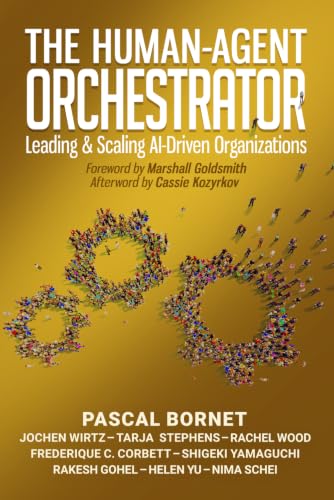
CURRENTLY READING
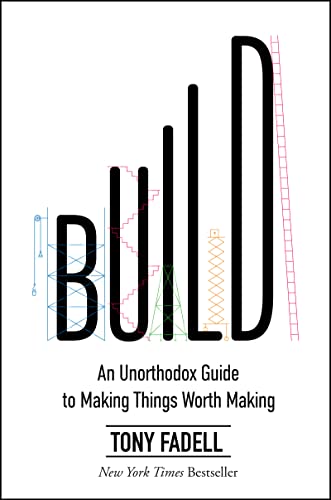
CURRENTLY READING
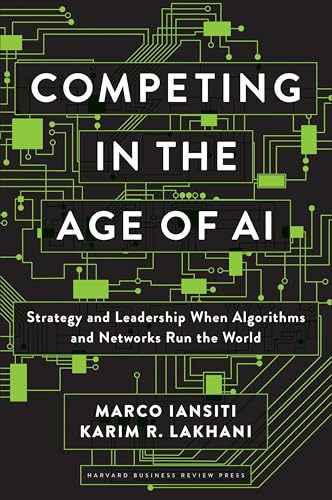
COMPLETED
My takeaway: What I took from this book is that digital firms scale through digital-first models and expand their scope through composable architecture. Designing AI factories thoughtfully will require new and different operating models.
View on Amazon (opens in a new tab)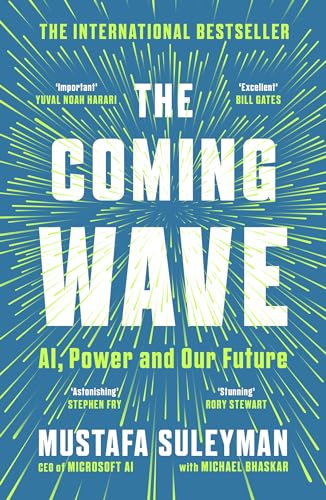
COMPLETED
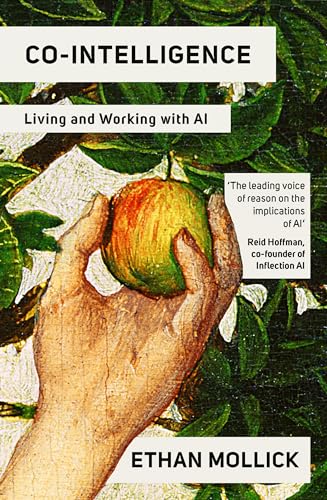
My takeaway: Sentience is a question worth exploring: are computers sentient, and can submarines swim? The book also made me think about how our expertise shapes what we see: AI can seem remarkably capable when we know little about a subject, but merely average when we know it well. My deduction is that AI may be most useful precisely where it is most dangerous: in areas where we lack the expertise to judge its answers.
View on Amazon (opens in a new tab)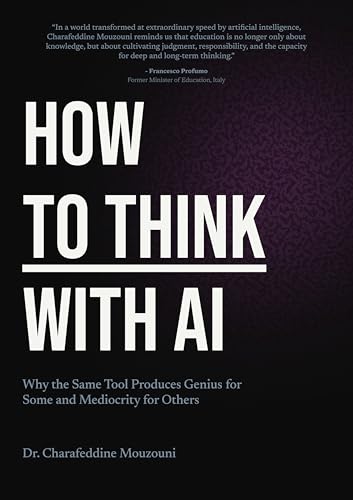
COMPLETED
My takeaway: One thing this book reinforced for me is that answer quality depends not only on the prompt, but also on how likely the model is to be right. The low-probability edge cases are often the most important. A result can look convincing and still carry risk, so we need to be deliberate about what we check and how.
View on Amazon (opens in a new tab)01 / 06
CONNECT
I'm always interested in conversations about business transformation, enterprise technology, AI-enabled engineering and the future of how organisations operate.
I particularly enjoy connecting with people who are turning ambitious ideas into practical business outcomes.
Connect on LinkedIn (opens in a new tab)ABOUT ME
My career has been built in financial services, leading teams and delivering mission-critical capabilities across complex technology, legacy integration and regulatory environments.
My foundation is in retail credit decisioning, software engineering, solution architecture and enterprise delivery.
That technical grounding shapes how I lead today. I believe meaningful transformation requires more than strategy or technology alone. It requires understanding the business problem, making sound architectural decisions, developing capable teams and taking accountability for the outcomes.
I think in systems, trade-offs, evidence and outcomes.
I'm most useful where complexity is high, the stakes are real, and technology is changing what's possible.
AREAS OF FOCUS
Technology should change how a business operates, not simply automate the way it works today.
I focus on connecting business strategy, operating models and technology investment to create meaningful and sustainable change.
Architecture is a business decision.
Reusable capabilities, sound engineering practices and clear ownership enable organisations to innovate faster, reduce complexity and respond to change.
AI is fundamentally changing how we design, build and operate businesses.
The opportunity is not simply to automate more work, but to rethink how humans and intelligent systems collaborate, with human judgement, verification and accountability remaining central.